
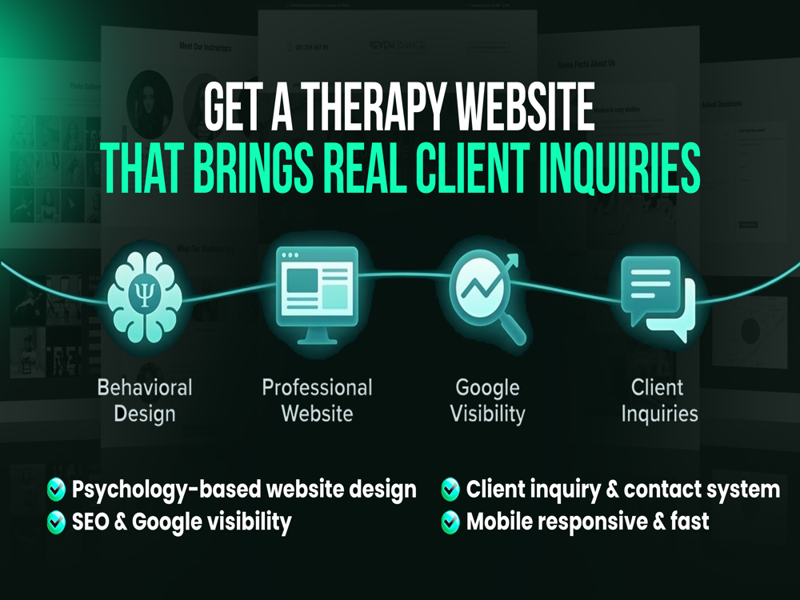
Private Practice Website Design: How to Build a Website That Brings Better Therapy Inquiries
A therapist in private practice needs more than just an online presence. They need a website that helps people trust them, understand their work, and feel ready to make contact.
That is where private practice website design becomes important.
A private practice website should not be built like a generic small business site. Therapy is personal, emotional, and trust-sensitive. The website has to do more than look nice. It needs to create a sense of clarity, safety, and professional credibility.
Why private practice websites need a different approach
In many industries, people choose based on price, speed, or convenience. In therapy, people also choose based on resonance and emotional trust.
That means private practice website design has to support a more human decision-making process. A visitor needs to quickly understand who you help, what kind of support you offer, and whether they feel comfortable enough to take the next step.
If the site is vague, cluttered, outdated, or emotionally flat, many people will leave before they ever reach out.
What a strong private practice website should include
A good private practice website usually starts with a clear homepage. The visitor should immediately understand what kind of therapist you are, who your work is for, and how to contact you.
It should also include an about page that feels personal and professional, service pages that clearly explain your specialties, and a simple contact process that reduces friction.
Strong private practice website design also includes a clean structure, mobile responsiveness, thoughtful calls to action, and clear trust-building elements throughout the site.
Why clarity matters more than complexity
Many therapists try to say too much on their website. They explain every nuance of their process, every training they have taken, and every concept behind their work.
But visitors usually need something simpler first. They need orientation.
Good private practice website design helps them understand the essentials quickly. It tells them what problems you help with, what the process looks like, and what they can do next.
A clear website usually performs better than a more complex one.
Private practice website design – Design and trust go together
Visitors make emotional judgments very quickly. If the website feels disorganized, too corporate, or too generic, it can quietly weaken trust.
That is why effective private practice website uses calm structure, readable typography, intentional spacing, and a tone that feels grounded and human.
The goal is not just to impress. It is to reassure.
SEO for private practice websites
Even the best-designed site will not help much if people cannot find it. That is why SEO should be built into the design from the beginning.
This means using the keyword private practice website design naturally in the page title, headings, intro, metadata, and internal link structure. It also means supporting that page with relevant blog content and service pages.
Search visibility and conversion should work together.
Final thoughts
Strong private practice website design helps therapists present their work more clearly, build trust more quickly, and generate better inquiries.
It is not just a visual upgrade. It is a practical business tool that supports the growth of a therapy practice while making the client journey easier and more intuitive.
Ključne riječi: therapy website, therapy website design, websites for therapists, therapist website design, website design for therapists, therapy practice website, therapist web design, psychotherapy website design, mental health website design