
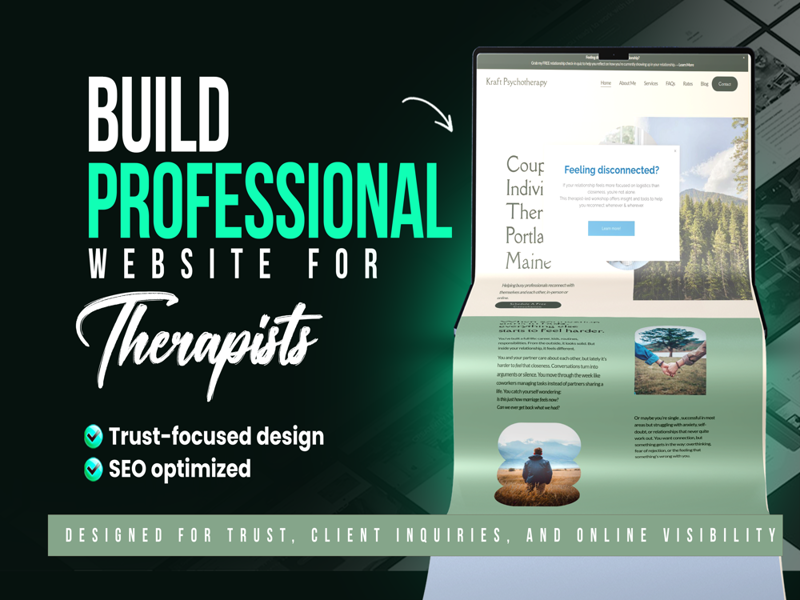
Why Hiring a Therapist Website Designer Can Improve Trust and Inquiries
A therapist does not need just any web designer. They need someone who understands how therapy clients think, hesitate, compare, and decide.
That is why hiring a therapist website designer can make such a big difference. The goal is not simply to build a functional website. The goal is to build one that feels trustworthy, emotionally clear, and capable of turning visitors into actual inquiries.
Not all designers understand therapy
Most designers can create pages, layouts, and visuals. But therapy is a special category.
People looking for therapy are often vulnerable, uncertain, emotionally tired, or afraid of making the wrong choice. They are not simply looking for a service provider. They are looking for a safe person and a credible path forward.
A generalist designer may not understand that.
A strong therapist website designer understands the emotional context behind private practice websites. They know that trust must be built early. They know that clarity matters more than cleverness. They know the site needs to reduce friction and help the visitor feel orientation, not overload.
What a specialist designer does differently
A specialist does more than choose colors and fonts.
A good therapist website designer thinks about homepage hierarchy, service page clarity, the emotional tone of copy, trust signals, mobile usability, inquiry flow, and search visibility.
They also understand the difference between making a site look nice and making it work.
For example, many therapist websites bury their strongest message or create too many options too early. A specialist notices that. They understand which sections should come first, what the visitor needs to know right away, and how to guide attention in a calm, intuitive way.
Trust-building is not accidental
Trust on a therapy website comes from many small decisions.
It comes from clear structure. It comes from language that feels grounded. It comes from consistent tone. It comes from strong visual coherence. It comes from ease of navigation. It comes from helping the visitor understand what to expect.
A skilled therapist website designer knows how to combine all of those elements into one experience.
That matters because therapy inquiries are highly trust-sensitive. Small design problems can create subtle doubt. If the website feels messy, too generic, outdated, or emotionally disconnected, visitors may leave even if the therapist is highly qualified.
Better design can support better-fit clients
A good website should not just bring more traffic. It should attract better-fit inquiries.
That happens when the message, design, and structure all align with the therapist’s audience. A trauma therapist may need a different tone than a couples therapist. A therapist for high-functioning professionals may need a different style than someone focused on postpartum support or adolescent care.
A strong therapist website designer helps shape that positioning. They help the practice feel clearer and more specific, which often leads to better inquiries and stronger alignment.
SEO and conversion should be built in
A website cannot help much if nobody finds it. That is why SEO matters.
But it is also not enough to rank. The site must convert.
A good therapist website designer thinks about both. They help structure the site in a way that supports search engines while still sounding human. They help the pages target relevant terms naturally. They think about title tags, headings, service structure, internal linking, and content opportunities.
That means your site is not just prettier. It is smarter.
Signs you may need a specialist
You may benefit from a therapist website designer if your website looks fine but gets few inquiries, if it feels too generic, if people seem confused about what you offer, if the mobile version is weak, or if your messaging does not really reflect the depth of your work.
You may also need one if your site was built years ago and no longer reflects your practice, audience, or business goals.
In many cases, the issue is not that the therapist needs more effort. It is that the website needs better strategy.
What to look for when hiring
Look for someone who understands both therapists and marketing. They should know how therapy clients think online. They should understand conversion without making the site feel pushy. They should know SEO, structure, copy flow, and trust-building.
Most importantly, they should understand that a therapy website is part of the therapeutic brand, not just a digital asset.
Final thoughts
Hiring a therapist website designer is not just about outsourcing a technical task. It is about improving how your private practice is experienced online.
The right designer helps your website feel more trustworthy, clearer, more professional, and more effective at turning attention into contact.
If your current site no longer reflects the quality of your work, getting specialized help may be one of the smartest upgrades you can make.
Ključne riječi: therapy website, therapy website design, websites for therapists, therapist website design, website design for therapists, therapy practice website, private practice website design, therapist web design, psychotherapy website design, mental health website design