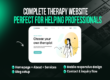

Websites for Therapists: What Every Private Practice Site Needs to Include
There are many websites online, but websites for therapists need to function differently from most other business websites.
A therapy website is not only a digital brochure. It is often a first point of emotional contact. It shapes whether a visitor feels confused, reassured, distant, connected, hesitant, or ready to reach out.
That is why the best websites for therapists are not built only around information. They are built around trust, clarity, and emotional readiness.
Why therapists need a specialized website
Many therapists start with a simple site just to “have something online.” That is understandable. But once a practice begins to grow, the website starts playing a much bigger role.
It becomes part of visibility, credibility, positioning, and client acquisition.
Strong websites for therapists help private practices do more than look professional. They help the right people understand the offer, feel safe enough to continue reading, and take action with less hesitation.
A therapist may be excellent in the room, but if the website feels vague, outdated, cold, or hard to use, potential clients may never make contact.
What every therapy website should include
The most effective websites for therapists usually include a few core elements.
A strong homepage is essential. It should quickly explain who the therapist helps and what kind of support they offer.
A clear about page matters because visitors often want to know who the therapist is before reaching out. This page should feel human and grounded, not overly formal or self-important.
Service pages are also important. These should explain key issues, types of therapy, and who each service is for.
A contact page should be simple, welcoming, and easy to use. Too much friction here can cost inquiries.
Testimonials, when ethically and legally appropriate in your context, can also strengthen trust. FAQs can reduce uncertainty. A blog can improve SEO and authority. Clear calls to action can guide the visitor through the site.
In other words, good websites for therapists combine emotional intelligence with strong structure.
Common problems with therapist websites
One major problem is lack of clarity. Many websites use gentle language, but they never clearly say what the therapist actually helps with.
Another issue is weak messaging. Some sites sound too generic, using phrases that could apply to any therapist anywhere. This makes the practice forgettable.
A third problem is poor design structure. The homepage may be too long, too dense, too abstract, or missing a clear next step.
Mobile optimization is also often overlooked. Since many visitors browse on their phones, websites for therapists need to work beautifully on smaller screens.
And finally, many therapy websites are not optimized for search. That means even if the content is good, the site may struggle to rank.
What makes a therapy website more effective
The best websites for therapists make it easy for visitors to recognize themselves.
Instead of talking only about the therapist’s process, they also speak to the client’s experience. They name emotional struggles clearly. They reduce uncertainty. They create a sense of guidance.
An effective site also keeps things simple. It does not overwhelm with ten competing messages. It has a clear flow. It leads the visitor through the experience.
This often includes a strong hero section, a short explanation of services, trust-building content, a warm introduction to the therapist, and a clear contact path.
SEO matters for private practice growth
A therapy website should not only feel good. It should also be discoverable.
That is where content strategy and on-page SEO matter. Strong websites for therapists often include pages and blog posts targeting meaningful keywords that match buyer intent and client intent.
This can include local therapy terms, issue-specific terms, service-based terms, and business-facing content if the therapist also offers consultation, workshops, or other services.
SEO is especially useful because it brings in people who are already searching. Unlike social media, where attention is interrupted, search traffic often comes from existing need.
Why the right website can improve inquiries
A better website does not magically create demand. But it can dramatically improve what happens with existing demand.
If people are already finding your practice, a stronger website can increase trust, improve fit, and reduce drop-off. If your website is weak, you may be losing people who were already interested.
That is why improving websites for therapists is often one of the most practical ways to improve private practice growth. It helps the right visitors move forward with less confusion and more confidence.
Final thoughts
The best websites for therapists are not just attractive. They are emotionally intelligent, strategically structured, and designed to support real human decisions.
They help people feel that this therapist may understand them. They make the next step easier. They turn online attention into real inquiries.
If a therapist wants more clarity, stronger positioning, better SEO, and a website that actually supports the practice, then investing in one of the better websites for therapists is not a luxury. It is a business asset.
Ključne riječi: therapy website, therapy website design, websites for therapists, therapist website design, website design for therapists, therapy practice website, private practice website design, therapist web design, psychotherapy website design, mental health website design